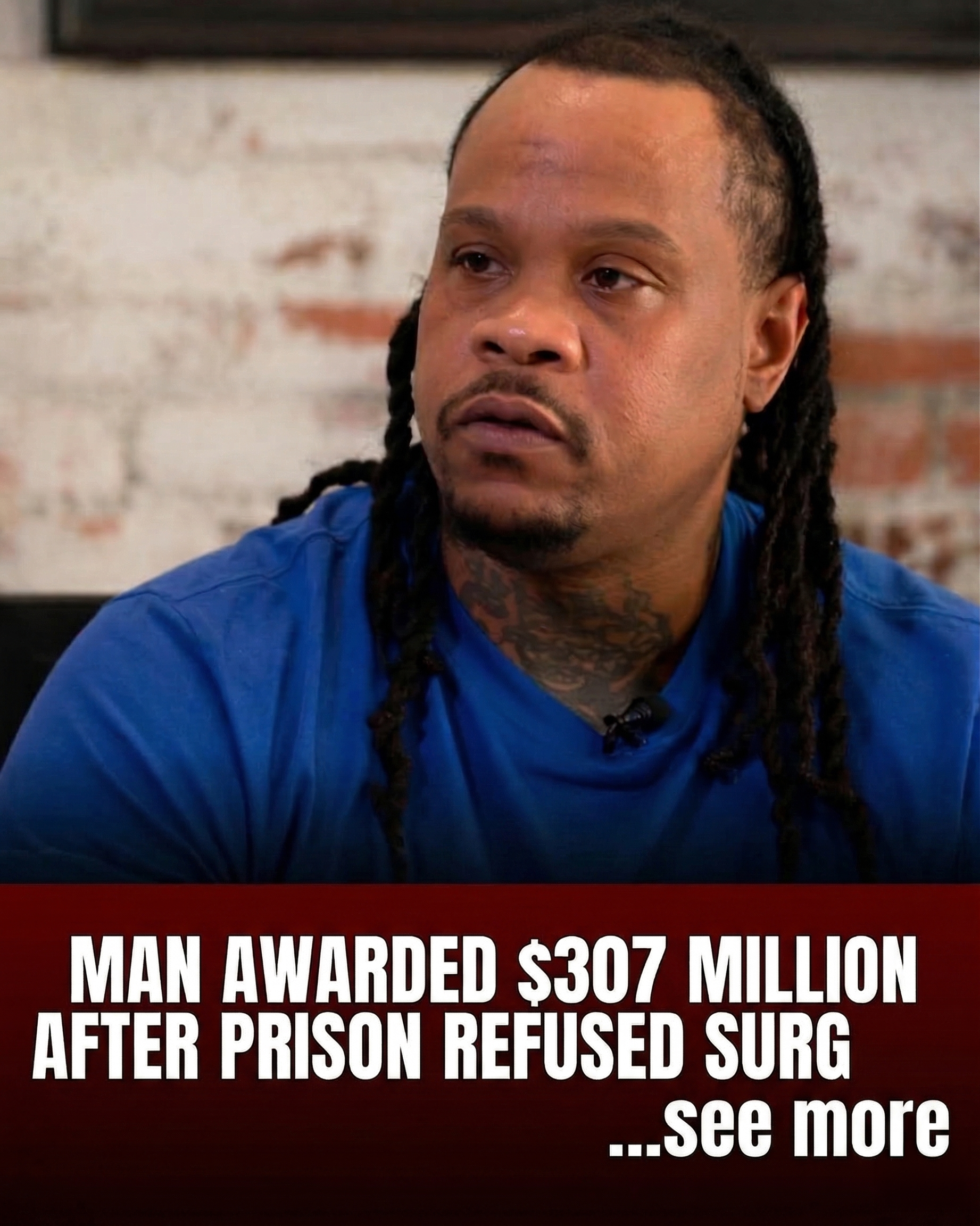
In one of the largest prison healthcare verdicts in U.S. history, a federal jury awarded more than $307 million to a formerly incarcerated man after determining that he was subjected to years of unnecessary suffering due to deliberate medical negligence while behind bars.
The case centers on Kohchise Jackson, a Michigan man who spent over two years in prison living with a severe and untreated medical condition that, according to his attorneys, should have been resolved with a routine surgery. Instead, Jackson was allegedly denied that procedure—not for medical reasons, but to save money.
Jackson’s ordeal began in 2016, when he developed a serious internal condition involving a hole between his colon and bladder. To manage the issue, doctors initially performed a colostomy, a procedure that diverts waste into a bag attached to the body. The operation was intended to be temporary, with a follow-up surgery planned to reverse it within months.
But that second surgery never came.
After entering the Michigan prison system, Jackson remained dependent on the colostomy bag for more than two years. According to court filings, the private prison healthcare contractor responsible for inmate care—formerly known as Corizon Health—repeatedly refused to authorize the reversal procedure. Jackson’s legal team argued that the decision was purely financial.
During that time, Jackson endured extreme physical and emotional suffering. The bag reportedly leaked frequently, emitted strong odors, and required constant maintenance—sometimes without proper supplies. He claimed he was forced to reuse medical equipment and was often left in unsanitary conditions.
The consequences went far beyond discomfort. Jackson described being humiliated, isolated, and even targeted by other inmates because of his condition. He reported repeated infections, severe pain, nausea, and fevers as waste leaked internally due to the untreated medical issue.
“I was treated like an animal,” Jackson said in statements following the trial, reflecting on both the physical neglect and the social stigma he endured in prison.
The lawsuit, filed in 2019, accused the healthcare provider of violating Jackson’s constitutional rights by showing “deliberate indifference” to his serious medical needs—a legal standard often used in cases involving prisoner care.
After hearing the evidence, a federal jury in Detroit took just over two hours to reach its verdict on April 2, 2026. The outcome was staggering: $300 million in punitive damages, $7.5 million in compensatory damages, and additional penalties against a medical official involved in the case.
Punitive damages—designed to punish wrongdoing and deter future misconduct—made up the overwhelming majority of the award. Legal experts say the size of the verdict reflects how strongly the jury reacted to the evidence presented during trial.
Jackson’s attorneys argued that the company prioritized profit over patient care, accusing it of maintaining a system where denying treatment was financially beneficial. They described the case as a broader indictment of for-profit prison healthcare systems, suggesting that similar practices may affect thousands of inmates across the country.
The defense, however, contested these claims during the trial. Lawyers for the healthcare provider argued that there was no urgent medical need for the reversal surgery and that performing it carried its own risks. They also suggested that cost was not a determining factor in the decision-making process.
Despite those arguments, the jury ultimately sided with Jackson.
What makes the case even more striking is what happened after his release. Once out of prison, Jackson underwent the long-delayed surgery—and reportedly recovered without complications. For his legal team, this served as powerful evidence that the procedure could and should have been done years earlier.
The verdict is already being described as a potential turning point in how prison healthcare providers are held accountable. Advocates for prison reform say the case highlights a longstanding issue: incarcerated individuals rely entirely on the system for medical care, leaving them especially vulnerable when that care is denied or delayed.
“This is a warning,” one of Jackson’s attorneys said after the verdict, emphasizing that corporations operating in correctional systems must be held to the same standards of care as any other medical provider.
For Jackson, the money cannot erase the years of suffering—but it represents acknowledgment of what he endured.
And for the broader system, the case sends a clear message: even behind prison walls, basic human rights—and medical care—cannot be ignored.