
The first warning didn’t come from a television broadcast or a flashing alert on a phone screen. It arrived quietly, in the atmosphere itself. The air felt heavier, the wind sharper, and the sky above New Jersey darkened into a bruised gray that hinted something serious was approaching.
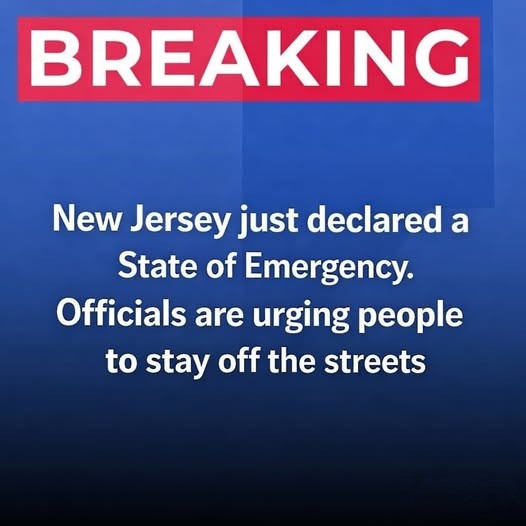
By the time Acting Governor Tahesha Way declared a State of Emergency at 1:00 PM, the storm had already begun tightening its grip across the state. What started as steady snowfall quickly escalated into a powerful winter system that brought travel to a near standstill and forced residents indoors.
Across highways that normally hum with constant traffic, a strange stillness took hold. Cars crept along cautiously or sat abandoned along the shoulders, hazard lights blinking through the swirling snow. Major roads that usually carry thousands of commuters each hour began to disappear beneath layers of ice and drifting snow.
Air travel also felt the storm’s impact. Flights were delayed or canceled as airports struggled to keep runways clear. Transportation networks that connect New Jersey to the rest of the region began to slow down and, in many places, shut down entirely.
The emergency declaration by Acting Governor Way allowed the state to mobilize additional resources, including emergency crews, snowplows, and public safety teams. But the announcement also carried a deeper message: safety had to come before routine.
Officials urged residents to avoid unnecessary travel. Simple errands, routine appointments, and even daily commutes were suddenly no longer worth the risk. Emergency responders emphasized that staying home could prevent accidents and ensure that roads remained clear for essential vehicles.
Snowplows worked continuously throughout the afternoon and evening, attempting to carve paths through the accumulating snow and icy slush. Yet the storm proved relentless. Roads cleared only moments earlier quickly filled again as powerful winds pushed fresh snow back across the pavement.
From radar maps glowing with intense reds and purples to the constant howl of winter wind outside, the storm painted a dramatic picture across the state.
But beneath the chaos of weather alerts and transportation disruptions, another quieter story began unfolding.
Communities across New Jersey began checking on one another. Neighbors knocked on doors to ensure elderly residents had heat and supplies. Group chats and neighborhood message boards filled with offers of help—spare generators, extra blankets, hot meals, or a place to stay if the power went out.
Local shelters prepared for potential outages, running backup generators and organizing supplies. Volunteers worked to ensure that anyone in need would have warmth and safety through the cold night ahead.
For a state defined by movement—busy highways, crowded trains, and nonstop commerce—the storm forced an unexpected pause. The rush slowed. The noise faded.
And in that rare moment of stillness, something else became visible: resilience.
Not the resilience of infrastructure or transportation systems, but the resilience of people looking out for one another when conditions grew dangerous.
As night settled across the snow-covered state, New Jersey waited together. Residents hoped that when the storm finally passed and morning light returned, it would reveal more than just snow-covered streets.
It would show a community that endured the storm not alone, but together. 🌨️