A major media storm erupted today after late-night host Jimmy Kimmel found himself at the center of a heated political backlash involving Donald Trump and Melania Trump—and it all started with a single joke.
The controversy traces back to a recent episode of Jimmy Kimmel Live!, where Kimmel delivered a satirical monologue ahead of the White House Correspondents’ Dinner. In the segment, he joked that Melania Trump had “a glow like an expectant widow,” a line that immediately sparked outrage among Trump supporters and quickly escalated into a full-blown political firestorm.
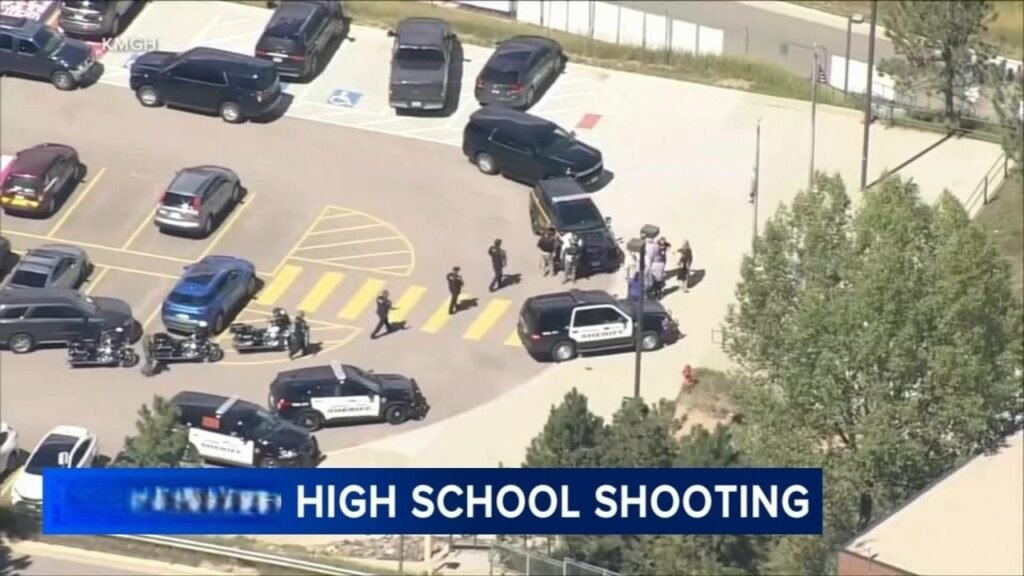
What may have initially been dismissed as typical late-night humor took on a much darker tone when, just days later, a shocking security incident unfolded. During the Correspondents’ Dinner in Washington, D.C., a gunman attempted to breach security, firing shots and injuring a Secret Service agent before being apprehended. The Trumps were quickly evacuated from the scene.
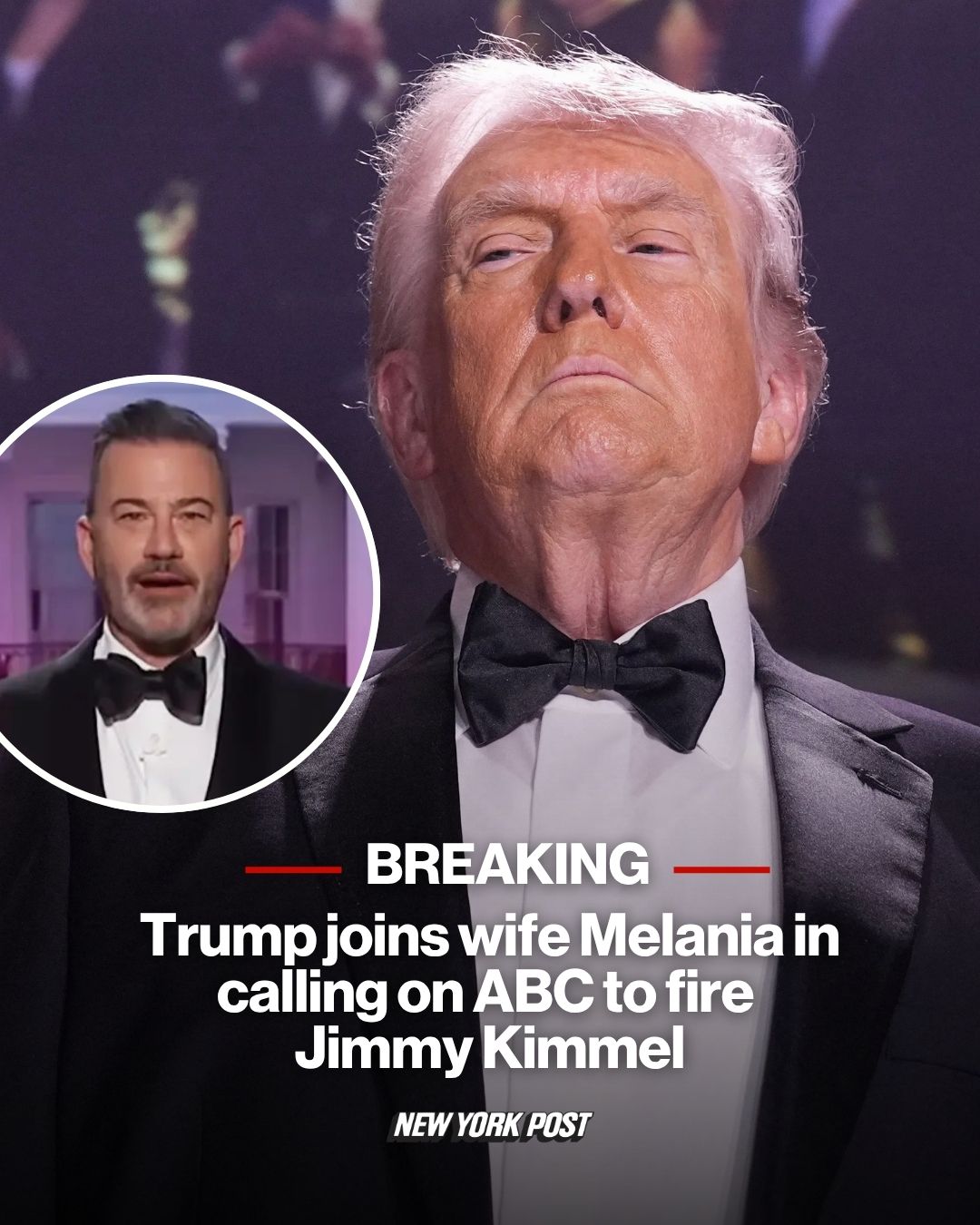
In the aftermath, Melania Trump broke her usual silence in a rare and strongly worded public statement. She called Kimmel a “coward” and accused him of spreading harmful rhetoric that contributes to political division. She urged ABC, the network that airs Kimmel’s show, to “take a stand” and hold him accountable.
President Donald Trump quickly followed with his own reaction, taking to social media to demand immediate action. He described Kimmel’s comments as “despicable” and went as far as calling for the comedian to be fired by ABC and its parent company, Disney.
“This is something far beyond the pale,” Trump reportedly wrote, framing the joke not just as offensive, but as dangerous in the context of rising political tensions.
The situation intensified further as members of the administration linked Kimmel’s humor to broader concerns about political discourse. Some officials suggested that jokes like these could contribute to a climate of hostility, especially given the recent attempted attack.
However, the controversy has also reignited a long-standing debate in America: where is the line between comedy and responsibility?
Kimmel, known for his sharp criticism of Trump over the years, has built much of his late-night identity around political satire. His supporters argue that his jokes fall squarely within the tradition of free speech and late-night commentary, which often pushes boundaries to provoke discussion.
Critics, on the other hand, say this moment is different.
The timing of the joke—so close to a real-life violent incident—has made it far more sensitive than a typical late-night punchline. Even some neutral observers have acknowledged that the context amplified the backlash, turning what might have been a passing remark into a national controversy.
So far, neither Kimmel nor ABC has issued an official response to the demands for his firing.
Behind the scenes, the situation presents a difficult challenge for media executives. On one side is pressure from a sitting president and First Lady, along with a segment of the public calling for accountability. On the other is the risk of appearing to censor a comedian for political reasons, which could spark backlash over freedom of speech.
This is not the first time Kimmel has faced controversy for his political humor. In previous incidents, his comments have drawn criticism from conservative figures and even led to temporary disruptions to his show. But this latest clash appears to be one of the most intense yet, given the real-world events surrounding it.
Meanwhile, the broader political climate continues to feel increasingly volatile. The attempted attack at the Correspondents’ Dinner has once again highlighted concerns about safety, political extremism, and the power of rhetoric in shaping public behavior.
As the dust settles, one thing is clear: this is no longer just about a joke.
It has become a flashpoint in the ongoing cultural battle over media, politics, and the limits of satire in an era where words can carry consequences far beyond the stage.
Whether ABC takes action or stands by its host, the fallout from this moment is far from over—and the clash between Jimmy Kimmel and the Trump family is likely to dominate headlines in the days ahead.