Donald Trump doubles down on aggressive tariff policy with 15% global tax – key US politics stories from 21 February 2026 at a glance
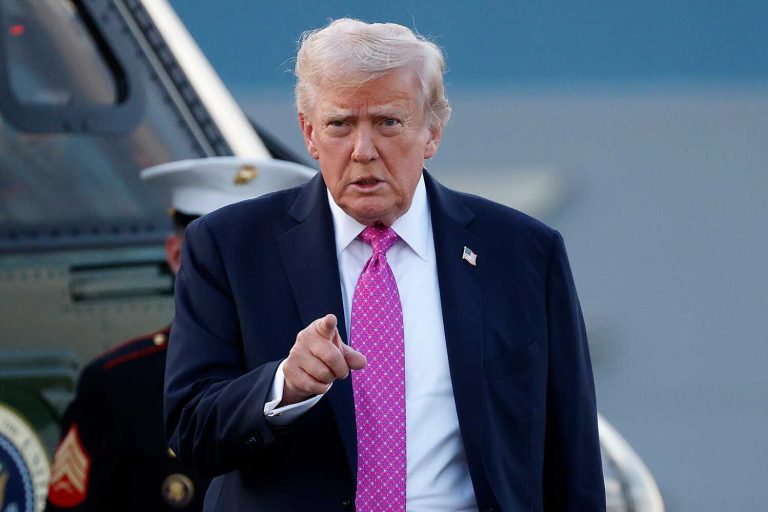
The administration of Donald Trump sharply escalated its global trade policy on Saturday, raising duties on imports into the United States to 15% and reaffirming the president’s commitment to an aggressive tariff agenda—just one day after the Supreme Court ruled that much of his previous tariff program was illegal.
In a post on his Truth Social platform, Trump said the decision followed a “thorough review” of what he described as an “extraordinarily anti-American decision” by the Supreme Court. He announced that the administration would hike import levies “to the fully allowed, and legally tested, 15% level,” framing the move as both lawful and necessary to protect U.S. economic interests.
The announcement came hours after the Supreme Court issued a 6–3 ruling rejecting Trump’s authority to impose sweeping tariffs under a 1977 economic emergency powers act. The decision curtailed the legal basis for the administration’s earlier tariff framework, which had been central to Trump’s trade strategy.
In response to the ruling, Trump initially unveiled a new 10% global tariff on Friday, invoking a different legal mechanism. That measure was presented as a workaround designed to keep pressure on foreign exporters while complying with the court’s decision. Less than 24 hours later, however, the president went further, raising the levy to 15% and signaling that the administration was prepared to test the limits of the remaining legal avenues available to it.
While Trump claimed the new tariffs would take effect “immediately,” uncertainty remained over the precise timing. It was unclear whether any formal executive orders or regulatory documents had been signed to implement the increase. A White House fact sheet released on Friday, which addressed the original 10% tariff plan, stated that those levies were scheduled to come into force at 12:01 a.m. Eastern Time on February 24. No updated guidance had yet been issued to clarify whether the higher rate would follow the same timeline.
International reaction was swift. German chancellor Friedrich Merz said he planned to travel to Washington with a coordinated European position, warning that continued uncertainty over U.S. trade policy was “poison” for global economic stability. He emphasized the need for clarity and predictability in transatlantic relations, particularly as businesses grapple with shifting rules and rising costs.
French president Emmanuel Macron echoed those concerns, saying France would carefully assess the consequences of the new global tariffs. Macron stressed that the fairest approach to international trade was “reciprocity,” suggesting that retaliatory measures could be considered if European industries were disproportionately affected.
The tariff escalation sets the stage for renewed legal challenges and potential trade disputes, both domestically and abroad. Analysts warn that the combination of higher import costs, legal uncertainty, and possible retaliation could increase pressure on global supply chains and financial markets in the weeks ahead, as governments and businesses adjust to yet another abrupt shift in U.S. trade policy.