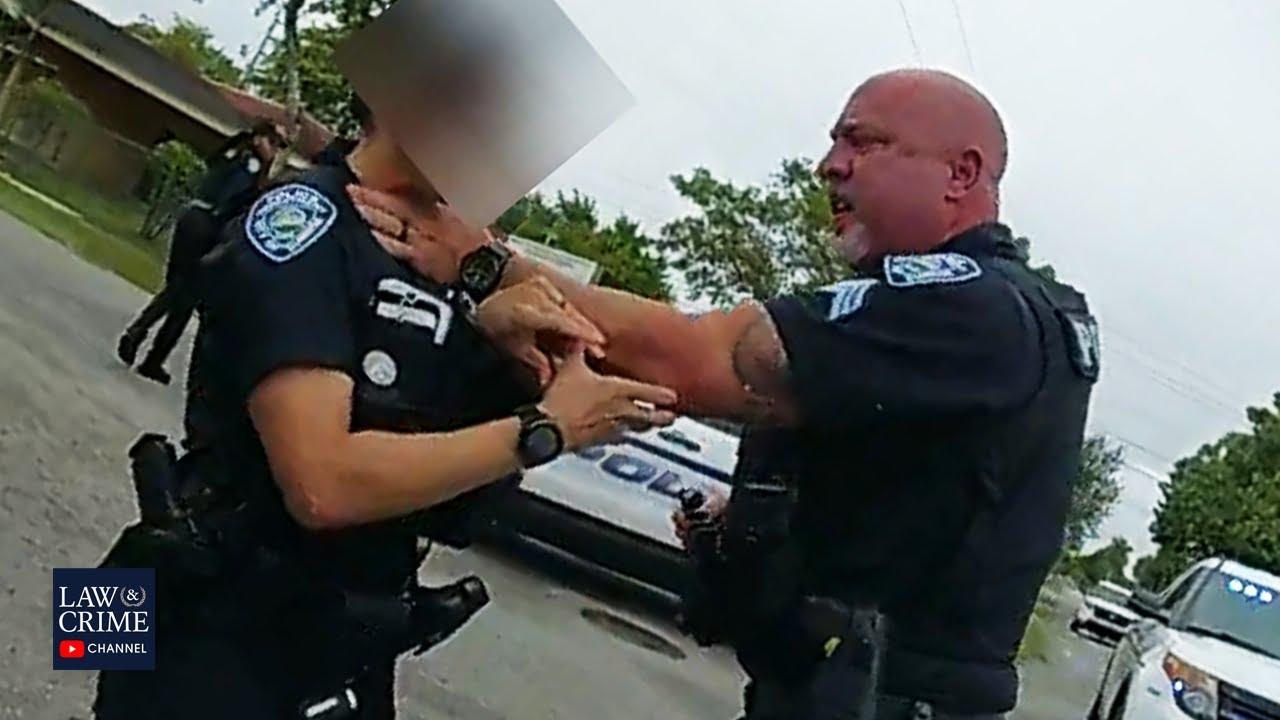
On November 19, 2021, a routine police response in Sunrise quickly escalated into a case that would draw national attention and raise serious questions about the use of force within law enforcement. A bodycam video captured the actions of Christopher Pullease, a 47-year-old police sergeant, during the arrest of a female suspect. The footage, later released to the public, showed Pullease grabbing the woman by the throat—an act that sparked outrage, internal investigations, and ultimately criminal charges.
According to reports, officers had responded to a call involving a disturbance that day. While details surrounding the initial reason for police involvement remain limited, the situation intensified when the woman began resisting arrest. In the video, officers can be heard shouting commands as they attempt to restrain her. At one point, Pullease steps in and is seen forcefully grabbing the woman by the neck while she is being subdued. The moment is brief but unmistakable—and it became the focal point of the case.
Bodycam footage has increasingly become a critical tool in policing, providing transparency and accountability in situations that might otherwise rely solely on conflicting testimonies. In this instance, the video served as key evidence in determining whether Pullease’s actions were justified or excessive. Almost immediately after the footage surfaced, it ignited debate both within the law enforcement community and among the public.
Following an internal review, Pullease was suspended and later terminated from the Sunrise Police Department. The department emphasized its commitment to maintaining professional standards and stated that the behavior seen in the video did not align with its policies or training. The case was then referred to prosecutors, who pursued criminal charges against the former sergeant.
Pullease was formally charged with four crimes, including battery and assault on a law enforcement officer. These charges underscore the seriousness with which authorities viewed the incident. While officers are granted certain legal protections and authority to use force when necessary, those actions must remain within clearly defined limits. Any deviation can lead to both departmental discipline and criminal prosecution.
In a development that added another layer to the case, Pullease himself was arrested and taken into custody. He later entered a plea of not guilty to all four charges during a court appearance last Thursday. His defense team has not publicly disclosed the full scope of their argument, but cases like this often hinge on whether the officer’s actions can be justified under the circumstances—particularly if there was an immediate threat to safety.
The case is currently moving through the judicial system, with Pullease’s next hearing scheduled for September 8 in a courtroom in Broward County. Legal experts note that the outcome could set an important precedent, especially in how use-of-force incidents involving supervising officers are handled. As a sergeant, Pullease held a leadership role, which may influence how his actions are judged both legally and ethically.
Beyond the courtroom, the incident has contributed to broader conversations about police conduct and accountability. In recent years, there has been increasing scrutiny of law enforcement practices across the United States, particularly in cases involving physical force. Community advocates argue that incidents like this highlight the need for stronger oversight, improved training, and clearer guidelines on de-escalation techniques.
At the same time, many in law enforcement stress the challenges officers face in rapidly evolving and potentially dangerous situations. They argue that split-second decisions must often be made under intense pressure, and that bodycam footage, while valuable, may not always capture the full context of an encounter. This tension between accountability and operational reality continues to shape public discourse around policing.
As the legal process unfolds, all eyes will remain on the case of Christopher Pullease. The outcome will not only determine his personal fate but may also influence future policies and expectations surrounding police behavior. For now, the bodycam video stands as a powerful reminder of the importance of transparency—and the consequences that can follow when actions cross the line.