
What started as a normal high school track meet ended in bloodshed, heartbreak, and a criminal case that has now captured the attention of the entire nation.
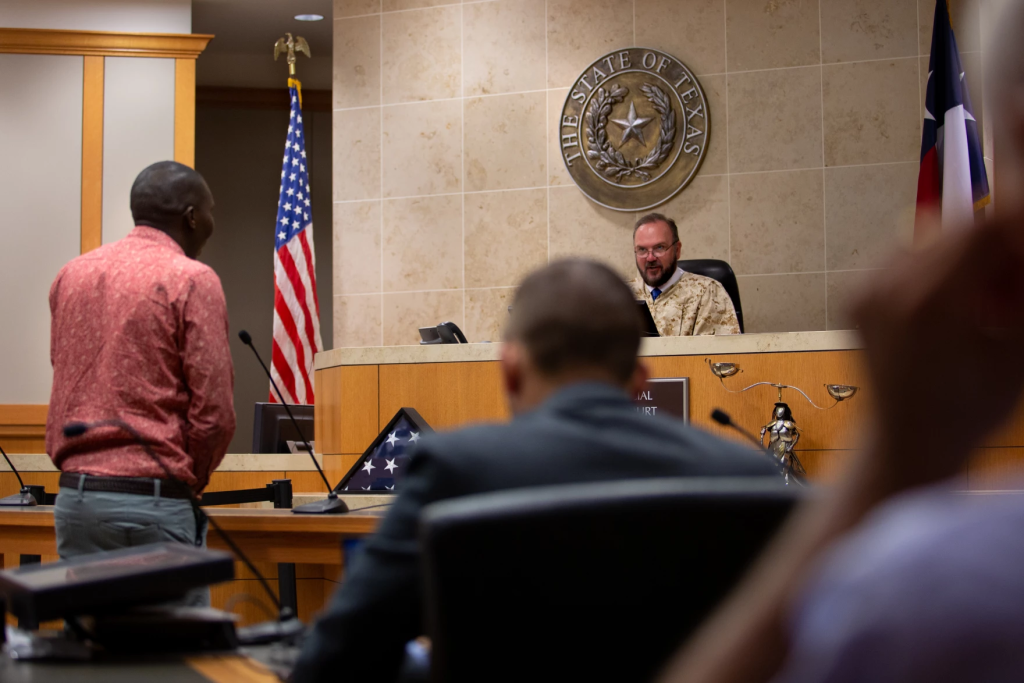
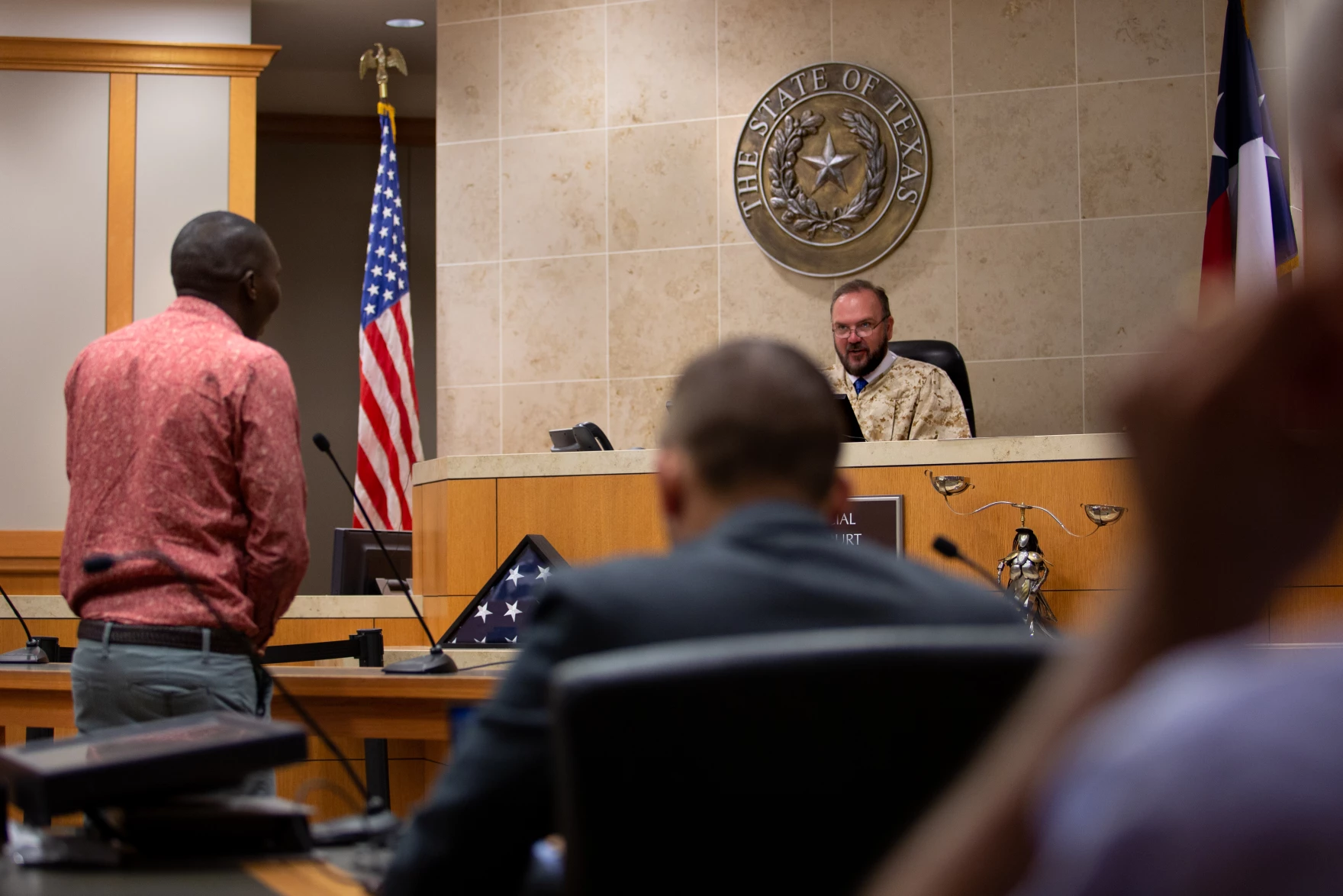
On Monday morning, the long-awaited murder trial of 19-year-old Karmelo Anthony officially began inside a crowded Collin County courtroom in Texas. But while the proceedings moved slowly at first, the tension hanging over the courtroom was impossible to ignore.
Anthony is accused of fatally stabbing 17-year-old Austin Metcalf during a confrontation at a high school track meet in Frisco last April — a shocking incident that instantly exploded across social media and sparked emotional debates nationwide.
Now, more than a year later, both families sat just feet apart as the legal battle that could define Anthony’s future finally got underway.
Outside the courthouse, cameras lined the sidewalks. Protesters and supporters gathered in separate groups. Online, millions continued arguing over the case that many say has become about far more than just one deadly altercation.
Because from the very beginning, this case has carried explosive racial tension.
Anthony is Black. Metcalf was white.
That fact alone turned the case into a lightning rod on social media, where people across the country quickly chose sides before a jury was ever selected. Some called Anthony a violent killer who deserves the harshest punishment possible. Others argued the media coverage and public outrage would have looked very different if the races were reversed.
Inside the courtroom Monday, Judge John Roach Jr. attempted to keep emotions under control as he addressed nearly 600 potential jurors.
The morning began with hours of private dismissals, removing individuals who were not legally qualified to serve due to criminal records, citizenship issues, or other disqualifying factors. The process moved slowly, but every moment carried enormous weight.
Because whoever ends up sitting in that jury box could ultimately decide whether Anthony spends the rest of his life behind bars.
Or worse.
Shortly after noon, the remaining potential jurors were brought together while members of the public watched remotely from another room. Judge Roach carefully explained the responsibilities of serving on such a high-profile trial.
He repeatedly warned jurors about the dangers of bias, assumptions, and social media influence.
“This case must be decided only on evidence presented in court,” the judge emphasized.
But many observers believe finding completely unbiased jurors may be nearly impossible.
The killing itself has already been endlessly dissected online. Videos, rumors, emotional tributes, and heated political commentary have flooded the internet for months. Every new update reignites arguments between people convinced Anthony acted with malicious intent and those who believe critical details have been ignored.
Anthony currently remains on house arrest while awaiting trial. He is required to wear an ankle monitor after a judge reduced his bond from $1 million to $250,000 — a decision that sparked outrage among many who believe the severity of the accusation should have kept him locked up.
The defense is expected to argue that Anthony did not intend for the encounter to turn deadly. Prosecutors, however, are preparing to paint a much darker picture.
Legal experts following the case say jury selection could become one of the most important parts of the entire trial.
Each potential juror was handed a detailed three-page questionnaire Monday, designed to uncover hidden opinions, political beliefs, prior knowledge of the case, and personal biases. Attorneys on both sides will use those answers to narrow the pool down to around 250 people before eventually selecting the final 12 jurors.
Potential jurors chosen to continue will return Wednesday morning for the next stage of questioning.
Opening statements are expected Thursday.
And once testimony begins, prosecutors are expected to present graphic evidence, emotional witness accounts, and detailed forensic findings connected to Metcalf’s death.
The trial is scheduled to continue through at least June 12 and could even extend into Saturdays due to the enormous amount of attention surrounding the case.
Meanwhile, social media continues turning the courtroom battle into a cultural war.
Hashtags supporting both Anthony and Metcalf have trended repeatedly over the past year. Some users claim Anthony is being unfairly demonized because of race, while others insist justice for Metcalf has become overshadowed by political narratives.
The case has even attracted commentary from influencers, activists, and public figures nationwide.
For Metcalf’s family, however, the trial is not about politics.
It is about a 17-year-old boy who never came home.
Family members have described the emotional devastation left behind after the fatal stabbing, saying every court appearance forces them to relive the worst day of their lives.
Anthony’s supporters, meanwhile, continue standing behind him, arguing the full story has not yet been heard publicly.
That divide was visible everywhere Monday — from the courthouse hallways to online comment sections filled with anger, grief, and accusations.
But as dramatic as the public reaction has become, the reality facing Anthony inside that courtroom is even more serious than many people realize.
Because under Texas law, a first-degree murder conviction carries devastating consequences.
If convicted, Anthony could face life in prison.
And although many people online are only now beginning to realize it, legal analysts say prosecutors technically have the ability to pursue the harshest possible punishment available under state law depending on how the case develops.
In other words…
The teenager at the center of this nationally watched courtroom battle could ultimately be fighting not only for his freedom —
—but for his life.