
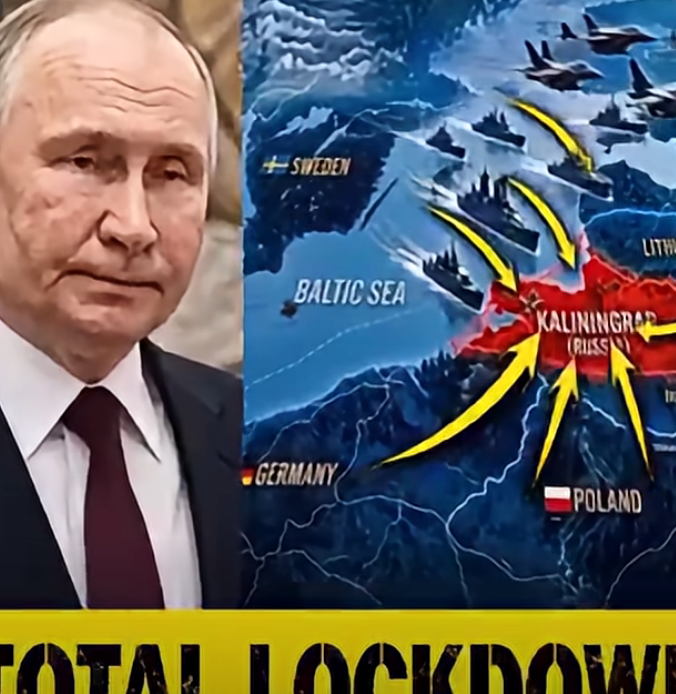
NATO is strengthening its military posture along the alliance’s eastern flank as tensions with Russia continue to grow, placing renewed attention on Kaliningrad and the strategically important Suwalki Corridor. The Russian exclave, located between Poland and Lithuania, remains a heavily militarized position overlooking key Baltic routes.
According to the supplied account, NATO Supreme Allied Commander Europe General Alexus Grynkewich has emphasized the alliance’s readiness to respond to a crisis. Poland is expanding its Eastern Shield defensive programme, while Germany is establishing its Lithuania Brigade to strengthen NATO’s presence in the Baltic region. Allied aircraft and US Abrams tanks also contribute to the wider reinforcement effort.
The report argues that Russia’s war in Ukraine may have reduced the forces available to defend Kaliningrad, although the extent of any withdrawals involving ground units and S-400 air-defense systems requires independent confirmation. The exclave remains strategically important because of its missile systems, air defenses and access to the Baltic Sea.
NATO’s Steadfast Noon nuclear exercise has added another dimension to regional tensions, involving training designed to maintain the alliance’s nuclear deterrence capabilities. Allied air patrols and bomber deployments further demonstrate the importance NATO places on Baltic security.
Despite the increasingly visible military buildup, claims that Kaliningrad is surrounded or that an immediate confrontation is imminent overstate the situation. The developments reflect heightened deterrence and preparations for potential contingencies, rather than evidence that military conflict has begun.
Kaliningrad’s geography explains why the exclave appears so often in discussions of Baltic security. It is Russian territory separated from the rest of Russia by other countries. Poland and Lithuania border it by land, while the Baltic Sea provides its maritime access. A description of those borders should not be confused with a report of a new military encirclement. The headline’s image of an immediate lockdown goes beyond the details given in the linked text.
The Suwalki Corridor receives attention because it connects Poland with Lithuania and the other Baltic states by land. For NATO planners, the ability to reinforce allies and maintain transport links matters during a crisis. That strategic importance can be discussed without assuming that a battle is underway. The source describes readiness, exercises and defensive preparations, which have different meanings from an announcement that forces have entered combat.
The readiness quotation in the article is presented as a statement of capability. Military commanders often discuss whether their forces can respond quickly, but such a statement does not itself identify an order to launch an attack. Similarly, the deployment of equipment or an exercise can signal deterrence and preparation. Assessing a particular event requires its date, participants, purpose and location.
The linked account acknowledges uncertainty about Russian force withdrawals and the status of air-defense systems. Those details should remain attributed to the report. The presence of a map with arrows cannot establish the movement of forces at the time someone views the reel. The article is therefore most useful as a discussion of why the region matters and how the alliance describes its readiness, with the urgent language of the caption read in that context.