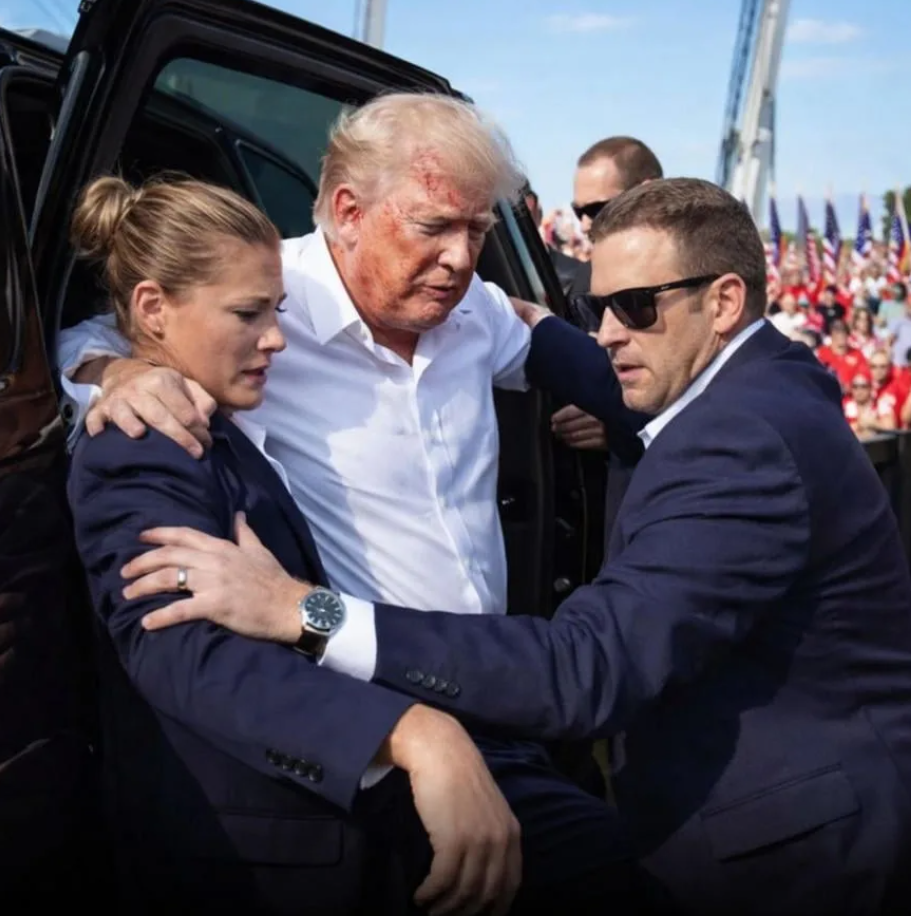
Cracks are beginning to appear within the political movement that once stood firmly behind Donald Trump. In an unexpected shift, some members of his MAGA base are now questioning whether the 2024 assassination attempt against him in Butler, Pennsylvania, was real—or something else entirely.
This growing wave of skepticism marks a striking change in tone. For years, Trump’s supporters have been known for their unwavering loyalty, often dismissing criticism from outside sources. But now, doubts are emerging from within the movement itself, fueled by a mix of unanswered questions, controversial political decisions, and speculation from influential voices in conservative media.
The theory gained traction after Joe Kent appeared on a program hosted by Tucker Carlson. During the interview, Kent suggested—without providing evidence—that investigations into the Butler incident may not have been fully completed. While he did not directly claim the event was staged, his remarks raised concerns about transparency and accountability.
Kent also acknowledged that when information is limited, people tend to fill in the gaps themselves. That is exactly what appears to be happening. Online discussions within pro-Trump communities have grown increasingly speculative, with some users openly questioning the official version of events.
Among those adding to the conversation is Trisha Hope, who publicly encouraged others to think critically about the situation. In a widely shared post, she argued that people should not blindly accept the narrative without asking questions. Her comments reflect a broader sentiment among a segment of supporters who feel that key details are missing.
Even more notably, comedian and podcast host Tim Dillon suggested that the incident “maybe was staged,” framing it as a possibility rather than a confirmed belief. While speculative, statements like these have helped amplify the theory across social media platforms.
Former Trump ally Candace Owens has also weighed in, offering her own controversial interpretation of events. Her claims, which lack supporting evidence, point to alleged behind-the-scenes motives involving powerful political donors. Although widely criticized, such narratives have contributed to growing divisions within the movement.
Adding a different dimension to the debate, activist Ali Alexander introduced a religious interpretation, referencing biblical prophecy and suggesting the incident could carry symbolic meaning. This blend of politics, conspiracy, and religion highlights how complex and fragmented the discussion has become.
At the center of these doubts is not just the incident itself, but Trump’s response afterward. Some supporters have noted that he rarely speaks about the event in detail, mentioning it only briefly during speeches. For critics within his own base, this perceived lack of emphasis has raised further questions.
At the same time, broader political developments are adding to the tension. Trump’s recent decisions—particularly in foreign policy and his rhetoric—have unsettled some of his supporters. For a movement built on strong, consistent messaging, any deviation can create uncertainty.
What makes this moment significant is not just the existence of conspiracy theories, but where they are coming from. Historically, such claims about Trump have originated from his critics. Now, they are emerging from within his own political base, signaling a potential shift in perception.
It is important to emphasize that these theories remain unproven. There is no credible evidence to support claims that the assassination attempt was staged, and no official investigation has reached such a conclusion. However, in today’s media environment, speculation can spread rapidly—especially when trust begins to weaken.
Whether this represents a temporary fracture or the start of a deeper divide within Trump’s support base remains unclear. But one thing is certain: the conversation is changing. As questions grow louder and narratives become more fragmented, the unity that once defined the MAGA movement may no longer be as solid as it once seemed.